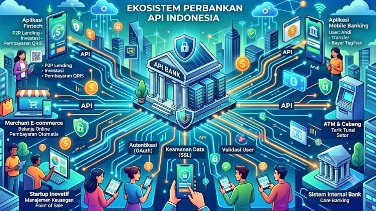
The role of bank APIs is already integrated into our daily lives. From mobile banking, QRIS, e-wallets, marketplaces, payment gateways, fintech, to crypto platforms, all rely on a stable connection between applications and banks.
The main appeal of bank APIs lies not only in the technology itself, but also in how it has changed public transaction behavior.
Tasks that were once manual are now automated. Payments that previously required manual confirmation are now verified instantly.
Services that used to operate separately are now connected within a single digital ecosystem.
Despite the convenience, this ease must be balanced with security responsibilities. Banks, companies, and users all play a role in ensuring transactions remain secure.
No matter how advanced the system is, user discipline remains the final line of defense.
By understanding bank APIs, we can see that the convenience of today’s digital transactions is made possible by the infrastructure behind the scenes.
It is this infrastructure that enables financial services to be connected, fast, and continuously adapt to the needs of the times.
This article on the difference between Bank API and Payment Gateway was compiled by LIPOSONLINE.COM from various banking technology sources.