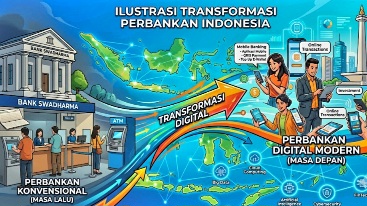
LIPOSONLINE.COM – As we enter 2026, the Core Banking System is no longer just a transaction recording platform. Cloud Computing, Open APIs, Artificial Intelligence, and Real-Time Banking have become the four key pillars shaping the future of banking.
Together, they determine how quickly a bank can innovate and how intelligently it can serve customer needs.
The digital era has fundamentally transformed financial services. In the past, customers had to visit a branch and wait in line to transfer money, open an account, or apply for a loan.
Read Also : 6 Banking Technology Trends 2026: From Digital Money to Agentic AI
Today, all of these services can be completed via smartphone within seconds. The speed of mobile banking is the result of advanced technology and a strong digital infrastructure.
Behind every instant transaction is the Core Banking System (CBS), a centralized platform that runs continuously to process and manage banking operations. This is the core engine that manages all of a bank’s operations.
Understanding the Core Banking System: The Foundation of Modern Banking
The Core Banking System is the central platform that manages all core banking activities. It covers account opening, balance management, fund transfers, bill payments, loan management, and the storage of all customer financial data.
The primary function of a CBS is to connect all bank branches into one centralized network. This means when a customer completes a transaction in Jakarta, the data is instantly updated in the central system and can be accessed in real time at a branch in Surabaya.
Read Also : Is Your Money Safe with Open Banking? The Facts
Without a robust CBS, it is impossible for banks to deliver digital services that are fast, secure, and fully integrated. As demand for app-based services continues to surge, the role of the CBS has become even more critical.
Banks are now expected not only to be fast, but also agile, protected against cyber threats, and capable of integrating with hundreds of third-party applications.
The Major Challenge: Legacy Core Banking Systems
Ironically, many large banks around the world still rely on CBS platforms built 20–30 years ago.
These systems use outdated programming languages and rigid architectures.