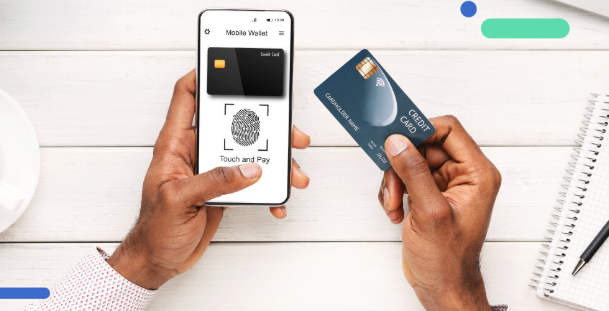
RIGHTBUSSINESS – Banking has changed dramatically in the digital era. Customers now expect to check balances, transfer money, pay bills, and manage accounts without visiting a branch. That convenience also creates a major challenge: banks need authentication methods that are both secure and easy to use.
This is where Biometric Authentication Banking becomes increasingly important. Instead of relying only on passwords or PINs, biometric systems can verify users through characteristics such as fingerprints, facial features, or other measurable biological and behavioral traits. NIST describes biometrics as recognition based on biological or behavioral characteristics, while also emphasizing that biometric authentication has limitations and should be implemented carefully.
The appeal is simple: a fingerprint or face is generally more convenient than remembering another password. But convenience alone does not make a system secure. A good banking biometric system must balance security, accuracy, privacy, usability, and fraud resistance.
What Is Biometric Authentication Banking?
Biometric Authentication Banking refers to the use of biometric characteristics to verify a customer’s identity when accessing banking services.
Read Also : Digital Banking Statistics: Key Numbers, Trends, and Adoption Data
Rather than asking a customer to enter only a password, the system compares a newly captured biometric sample with a previously registered reference. Depending on the bank and device, authentication may involve:
- Fingerprint recognition
- Facial recognition
- Iris recognition
- Behavioral characteristics
- Device-based biometric verification
The process is usually designed as a verification rather than simply identifying an unknown person. For example, a banking application may already know which customer account is being accessed and then verify whether the fingerprint or face presented matches the enrolled biometric reference.
NIST explains that biometric comparisons are probabilistic. This means a biometric system can sometimes produce either a false match or a false non-match, making accuracy measurement an important part of biometric security.
How Biometric Authentication Works in Banking
Although the technology behind biometric systems can be complex, the customer-facing process is usually straightforward.
1. Biometric Enrollment
First, the customer registers a biometric characteristic. A fingerprint sensor or camera captures the necessary information and creates a digital biometric reference.
A well-designed system does not simply treat a biometric characteristic like an ordinary password. Biometric information is sensitive because, unlike a password, a person’s physical characteristics cannot simply be replaced if compromised.
2. Biometric Capture
When the customer attempts to access an account, the device captures a new biometric sample.
For example, a smartphone may use its fingerprint sensor or facial recognition camera. The captured sample is then processed for comparison.
3. Matching and Verification
The system compares the new sample with the registered reference. If the similarity score meets the required threshold, authentication can be approved.
The threshold matters because making a system stricter can reduce false matches but may also increase false non-matches. NIST identifies this as an important trade-off in biometric authentication.
4. Additional Security Checks
Modern banking systems can combine biometrics with other security controls, including:
- Device authentication
- One-time verification codes
- Transaction monitoring
- Risk-based authentication
- Account activity analysis
- Encryption and secure communication
This layered approach is important because biometrics should not be treated as a perfect security solution.
Key Benefits of Biometric Authentication Banking
1. Greater Convenience
One of the biggest advantages is simplicity. Customers do not need to remember a separate password every time they access a banking application.
A fingerprint or facial scan can take only a short moment, reducing friction during routine login.
For customers who frequently use mobile banking, this can make authentication feel almost invisible.
2. Reduced Dependence on Passwords
Passwords remain vulnerable to common problems such as reuse, weak combinations, phishing, and credential theft.
Biometric authentication can reduce dependence on passwords for certain authentication steps. However, banks still need recovery and alternative authentication methods because biometric systems can occasionally fail.
3. Stronger Account Protection
Biometric authentication can add another layer of protection against unauthorized access.
NIST’s current digital identity guidance specifies a false-match rate of 1 in 10,000 or better for biometric systems under its relevant authentication requirements. It also recommends presentation attack detection as part of biometric security.
That figure illustrates how seriously biometric accuracy is treated in high-assurance authentication systems.
4. Faster Customer Authentication
Traditional authentication may require several steps, particularly when customers forget credentials or need additional verification.
Biometric verification can streamline routine access. In practical terms, its value is not only security but also the reduction of unnecessary friction.
5. Better Mobile Banking Experiences
As smartphones increasingly include biometric sensors, banks can integrate authentication directly into applications.
Instead of building a completely separate biometric device, a bank can use supported security capabilities already available on the customer’s device.
Biometric Security: The Numbers That Matter
When evaluating biometric authentication, percentages alone can sometimes be misleading. Several different metrics are important.
False Match Rate
The False Match Rate (FMR) represents the probability that a biometric system incorrectly accepts an impostor.
For example, an FMR of 0.01% corresponds to approximately 1 false match in 10,000 comparisons under the specified testing conditions.
NIST’s current guidance uses 1 in 10,000, or 0.01%, as a required FMR level for the relevant biometric authentication context.
False Non-Match Rate
The False Non-Match Rate (FNMR) measures the probability that a legitimate user’s biometric sample is incorrectly rejected.
This is primarily a usability concern. A system with a very low FMR but an excessively high FNMR could be secure but frustrating for legitimate customers.
NIST’s guidance indicates that biometric systems should demonstrate an FNMR below 5% under its specified conditions.
Presentation Attack Detection
Another important category is Presentation Attack Detection (PAD).
PAD is designed to identify attempts to fool a biometric sensor using an artificial or manipulated presentation. NIST specifically recommends PAD for biometric systems and requires it for facial recognition within its current guidance.
This is important because a biometric system does not automatically become secure simply because it has a high matching accuracy.
Risks and Challenges of Biometric Authentication Banking
Biometrics offer significant benefits, but they also introduce risks.
1. Privacy Concerns
Biometric information is highly sensitive personal data. A fingerprint or facial characteristic is connected to an individual and cannot be changed in the same way as a password.