LIPOSONLINE.COM – An Application Programming Interface or Banking API, plays a vital role in the Digital Banking Era of 2026. In today’s increasingly digital world, almost every financial activity can be completed within seconds—from paying bills, topping up e-wallets, and transferring funds to purchasing mutual funds.
Behind this convenience lies an essential technology that often goes unnoticed: the Banking API. So, what exactly is a Banking API, and why has it become the backbone of the digital financial ecosystem in 2026?
Understanding Banking APIs: The “Digital Counter” Between Applications and Banks
According to information compiled by LIPOSONLINE.COM from various banking technology sources, an API is essentially an interface that enables two different systems to communicate securely and in a structured manner.
Read Also : The Future of Core Banking System 2026: Cloud, API, AI and Real-Time Banking Trends
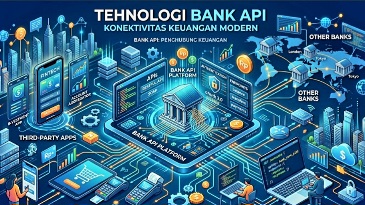
In the banking industry, a Banking API serves as the digital communication channel between third-party applications and a bank’s core banking system.
Think of a Banking API as a digital service counter. When an application needs data or instructions from a bank, it does not directly access the bank’s entire internal system.
Instead, it sends a request through a predefined API. The bank processes the request and returns the appropriate response based on the permissions granted.
For example, when you make a purchase on an e-commerce platform and choose a bank transfer as your payment method, the platform sends a request to the bank via the API to verify whether the payment has been received.
Read Also : 6 Banking Technology Trends 2026: From Digital Money to Agentic AI
Once the payment is confirmed, the bank returns a successful response, allowing the e-commerce platform to automatically update the order status to “Paid” without requiring the customer to upload proof of payment.
Why Are Banking APIs Essential in the Era of Instant Transactions?
The growing demand for Banking APIs is driven by changing consumer expectations. Modern consumers expect banking and financial services to be quick, seamless, and end-to-end automated.
When making a payment, they expect instant confirmation. When topping up an e-wallet, they want the balance updated immediately. When transferring money, they expect real-time notifications. Without Banking APIs, these processes would have to be handled manually.