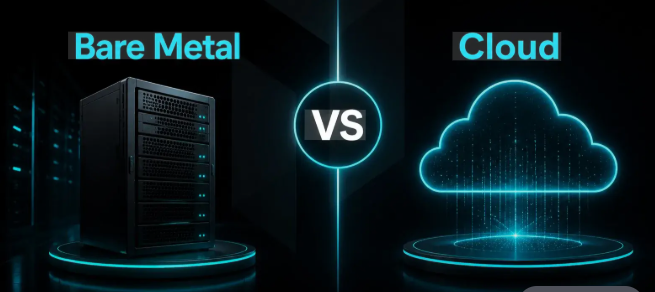
LIPOSONLINE.COM – In modern banking technology, choosing the right server infrastructure is an important decision that can affect system performance, security, and the ability to handle digital transactions. Banks need computing environments that can operate reliably 24 hours a day, especially when handling millions of transaction requests across different digital channels. Two approaches that are often considered are bare metal infrastructure and virtual infrastructure.
Both have different characteristics when it comes to computing resources, server management, scalability, and operational efficiency. Understanding these differences can help banking institutions choose the infrastructure that best fits their digital service requirements while maintaining a balance between performance, security, and technological flexibility.
What Are Bare Metal and Virtual Infrastructure in Banking Technology?
Bare metal and virtual infrastructure are two approaches to providing computing resources for running banking applications and services. The main difference lies in how hardware is used and how computing resources are allocated to different systems.
Understanding Bare Metal Infrastructure
Bare metal infrastructure is a computing approach that uses physical servers directly, without relying on a virtualization layer as the main intermediary. In this model, the operating system and applications can interact directly with hardware resources such as processors, memory, and storage.
In banking environments, bare metal is often considered for applications that require consistent performance and low-latency data processing. Examples include core transaction systems, large-scale payment processing, and applications with specific computing requirements.
Some of the main characteristics of bare metal include:
- Direct hardware access: Applications can use physical server resources without sharing them through a hypervisor.
- More consistent performance: There is no additional virtualization overhead in the main processing path.
- Greater infrastructure control: Technology teams can configure hardware and operating systems more specifically.
- Physical resource isolation: A server can be dedicated to a particular working environment or application workload.
Although it offers greater control and high performance, bare metal requires careful capacity planning. Adding resources usually involves purchasing, installing, and configuring new hardware.
Understanding Virtual Infrastructure
Unlike bare metal, virtual infrastructure uses virtualization technology to divide a single physical server into multiple virtual computing environments. Each environment can run its own operating system and applications independently.
This technology generally relies on a hypervisor, which is software responsible for allocating physical resources to multiple virtual machines (VMs).
In banking technology, virtual infrastructure allows a group of physical servers to support several applications at the same time. For example, customer service applications, transaction reporting systems, software testing environments, and analytics services can run on separate virtual machines.
The main characteristics of virtual infrastructure include:
- Resource allocation: CPU, RAM, and storage can be allocated to multiple virtual machines.
- Operational flexibility: Computing capacity can be adjusted based on application requirements.
- Centralized management: Administrators can manage multiple virtual machines through a management platform.
- Easier recovery: Virtual machine snapshots and backups can help restore systems when disruptions occur.
- Hardware utilization: Multiple applications can run on the same physical server as long as sufficient capacity is available.
Virtualization is also one of the key foundations of cloud computing, which is increasingly used to support digital services.
Differences Between Bare Metal and Virtual Infrastructure
The differences between these two approaches go beyond the type of server being used. In banking environments, the choice also affects resource management, processing speed, security, and system development strategies.
1. Performance and Processing Speed
Bare metal has an advantage when it comes to direct hardware access. Since applications do not rely on a hypervisor layer to run, potential virtualization overhead can be reduced.
This becomes important when banks operate applications that require consistent response times, especially when processing high volumes of transactions.
Virtual infrastructure, on the other hand, has an additional layer for managing computing resources. This layer can introduce some overhead, although its impact can be minimized with modern virtualization technology.
As a technical overview, here are some key differences worth considering:
- Bare metal: Suitable for applications that require high performance and strict latency requirements.
- Virtual infrastructure: Suitable for various applications that need flexibility and shared resource allocation.
- Modern virtualization: Can deliver performance close to physical servers when configurations and resource allocation are properly managed.
There is no single performance advantage percentage that applies to every system. Test results may vary depending on the processor, storage configuration, network, hypervisor type, and application characteristics.
2. Infrastructure Scalability
Scalability is an important factor because the number of banking transactions can change depending on customer activity. For example, when mobile banking usage increases, systems must be able to handle additional requests without disrupting services.
With bare metal, increasing capacity usually requires adding or replacing hardware. This process can take time because it involves server procurement and configuration.
In contrast, virtual infrastructure allows administrators to reallocate CPU, RAM, and storage based on requirements. If sufficient hardware capacity is still available, resources can be added to virtual machines without installing new physical servers.
In practice, virtual infrastructure offers greater flexibility when dealing with changing workloads. However, its capacity is still limited by the physical hardware supporting it.
3. Security and System Isolation
Security is an essential part of banking technology. The infrastructure must be able to protect customer information, transaction data, and internal systems from unauthorized access.
Bare metal offers hardware-level isolation when a server is dedicated to a specific application. This can reduce the risk of disruptions caused by shared resource usage.
However, using a dedicated physical server does not automatically make a system more secure. Banks still need operating system protection, access controls, encryption, activity monitoring, and regular security updates.
In virtual infrastructure, each virtual machine has its own operating system environment. This isolation helps separate applications running on the same physical server.
Even so, additional risks may arise, including hypervisor vulnerabilities, virtualization configuration errors, and potential cross-environment access if isolation mechanisms are not properly implemented.
Some security measures that should be applied include:
- Using multi-factor authentication for administrators.
- Encrypting data both at rest and in transit.
- Separating networks based on application functions.
- Updating systems regularly.
- Monitoring server activity and maintaining security logs.
- Limiting access privileges based on user responsibilities.
4. Operational Cost Efficiency
Infrastructure expenses do not come only from purchasing servers. Banks must also consider electricity, data center cooling, hardware maintenance, software licenses, and technical personnel.
With bare metal, dedicated server usage can leave some hardware capacity unused when application workloads are low. This can reduce overall resource efficiency.