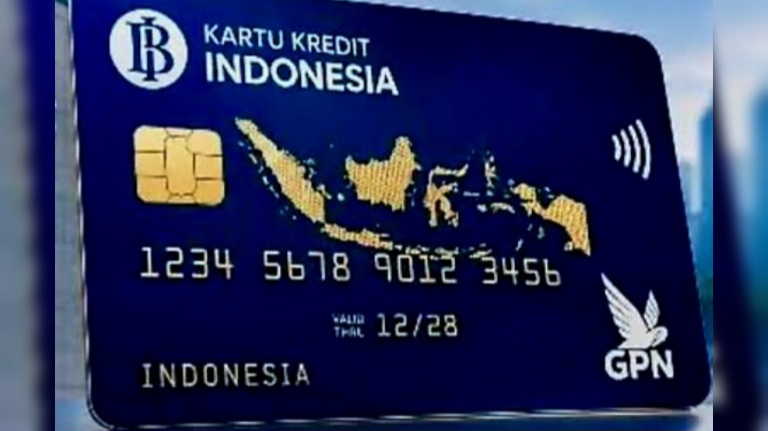
LIPOSONLINE.COM – Bank Indonesia and the Indonesian Payment System Association (ASPI) launched the Indonesian Credit Card (Kartu Kredit Indonesia) coinciding with the 81st Independence Day of the Republic of Indonesia.
The launch was held alongside the announcement of the expanded 0% QRIS Merchant Discount Rate (MDR) policy as a step to accelerate digital financial inclusivity across the nation.
This agenda took center stage at the Payment System Policy Response Launch event held at the Bank Indonesia Head Office, Jakarta, on Monday, August 17, 2026. Associations, Payment System Service Providers, and industry players were present.
Indonesian Credit Card: A Domestic Payment Instrument with Deferred Payment Features
The Indonesian Credit Card arrives as an alternative national payment instrument. It functions as a transaction funding source utilizing a deferred payment scheme processed entirely onshore/domestically.
Read Also :Core Banking Migration
This instrument can be used via QRIS channels through both Scan and Tap mechanisms, aiming to expand an inclusive, efficient, and affordable digital economy ecosystem for the public and business players.
As of August 17, 2026, 8 Payment Service Providers (PJP) have issued the Indonesian Credit Card. The eight banks are BCA, Mandiri, BNI, BRI, CIMB Niaga, Permata, Bank Mega, and BSI—which developed a Sharia-compliant financing scheme.
Moving forward, Bank Indonesia alongside the industry will continue to develop the features and services of the Indonesian Credit Card. Enhancements will focus on interoperability, data security, and ease of access to reach broader segments of society.
0% QRIS MDR Expanded, Effective October 1, 2026
On the same momentum, Bank Indonesia also announced the expansion of the 0% QRIS Merchant Discount Rate (MDR). This new policy officially takes effect on October 1, 2026.
Read Also : Legacy Core Banking: Understanding Old Banking Systems
Specifically, the 0% MDR remains applicable to Ultra Micro (UMI) merchants for transactions up to Rp500,000. Additionally, the policy expands to all other merchant categories—small, medium, and large—for transactions up to Rp100,000. Previously, transactions at that nominal level were subject to a 0.7% MDR.
This expansion aims to reduce transaction costs borne by business operators. With a lighter burden, it is expected that the benefits of payment digitalization will be more broadly felt by the public and MSMEs.
Bank Indonesia Acting Governor Destry Damayanti emphasized that every payment system development step must yield a tangible impact on the economy.
“This policy response stems from an optimism that this policy represents a tangible contribution from Bank Indonesia alongside the payment system industry for the Indonesian nation, as well as an Independence Day gift for the public. Therefore, this policy is built upon the principle of balance—providing benefits to the public, creating room to grow for merchants, and opening new opportunities for Payment System Service Providers, while maintaining industry sustainability,” she explained, as quoted from the BI website, Thursday, August 20, 2026.
Read Also :Core Banking Architecture: Building a Modern, Scalable Banking System
According to Destry, strengthening an efficient and inclusive payment system will support public economic activities, ultimately driving sustainable national economic growth.
QRIS Adoption Continues to Rise, Reaching 44.86 Million Merchants
The development of QRIS serves as a strong indicator of the ongoing payment digitalization in Indonesia. As of June 2026, the number of QRIS users reached 65.77 million. Out of that total, 6.23 million were new users acquired during the January – June 2026 period.
These figures show that public interest in digital payments continues to grow. On the merchant side, QRIS has reached 44.86 million merchants, 96.68% of which are MSMEs.