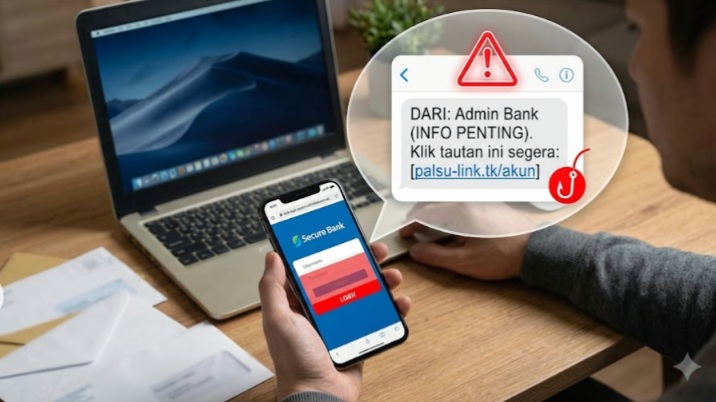
LIPOSONLINE.COM – Cybercrime is on the rise. One of the most common tactics used by scammers is phishing links. Fake links can arrive through WhatsApp, SMS, email, and even social media DMs.
The goal is always the same: to steal personal data, passwords, PINs, and drain your bank account.
Not every link you receive is dangerous. But one careless click can hand your data directly to criminals.
Here is a complete guide to recognizing phishing link signs and how to avoid them, compiled by liposonline.com from various sources.
1. Pretending to Be an Official Institution and Creating Urgency
Scammers love to impersonate banks, tax offices, marketplaces, or big tech companies.
Read Also : Top-Rated Online Banking Apps for Fast Banking
Common phrases they use:
– Your account will be closed in 24 hours!
– Update your data now to avoid suspension
– Download this app to prevent viruses
Other red flags to check:
– Lots of typos and poor grammar
– Messy email or website design
– Blurry, distorted, or misaligned company logo
– No official contact info in the message footer
Read Also : : Biometric Technology in Digital Banking 2026: Security, Benefits, and Challenges
Before clicking, always confirm with the official Call Center. Ask if they really sent that notice. If not, it’s definitely a phishing link.
2. Fake and Suspicious URLs
Phishing actors are experts at copying real website addresses. They only change one or two characters to make it look legit.
Examples of domain manipulation: www.bankkamu.co.id becomes www.bankkamuu.co.id, doubled letterslogin-bankkamu.com- uses .com instead of the official .co.idbankkamu.secure-login.xyz — uses strange country domains like .ru, .xyz