LIPOSONLINE.COM – Digital transactions are growing rapidly. One of the biggest innovations now in the spotlight of the financial industry is open banking.
This service makes banking activities faster, more connected, and accessible directly from various applications.
So, what exactly is open banking? What are the benefits for customers, partners, and banks? Here is the full explanation.
What Is Open Banking?
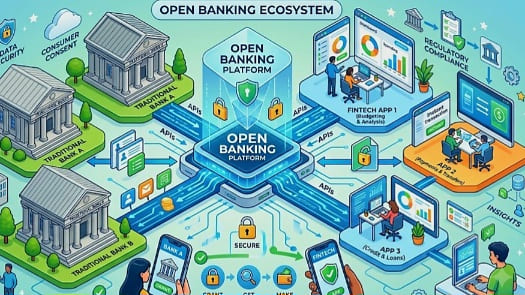
Quoted by LIPOSONLINE.COM from BRI’s official website, open banking is an open banking system. Banks provide limited access to third parties, such as fintech companies and e-commerce platforms, to connect with customer data through Application Programming Interface (API) technology.
Read Also : What Is a Banking API? Its Functions, How It Works, and Why It Matters in the Digital Banking Era of 2026
The goal is to integrate financial services directly within a single application. A real example in Indonesia is BRIAPI from Bank BRI, which is already used by many digital platforms.
With API, application developers can offer features such as payments, transfers, and even account opening without requiring customers to leave the app.
Benefits of Open Banking for 3 Parties
1. For Customers
– More Innovative Services: Customers can pay using virtual accounts on e-commerce, link debit cards to fintech apps, and access new financial products faster.
– Safe and Convenient Transactions: All integrations are supervised by the OJK and Bank Indonesia. Data access is only allowed with the customer’s permission.
Read Also : Is Online Banking Safe? AI, Biometrics & 2026 Security
– Available Anytime: Open accounts, transfer money, and pay bills 24/7 without visiting a branch office.
2. For Partners / Application Developers
– Varied Payment Options: Apps become more attractive with multiple payment methods. This leads to higher transaction volume and partner revenue.
– Access to Big Data: With customer consent, partners can analyze consumer behavior to create more targeted marketing strategies.