Administrative teams would need to check bank statements individually, verify payment amounts, and update transaction records manually—a process that is slow, error-prone, and inefficient, especially for businesses handling large transaction volumes.
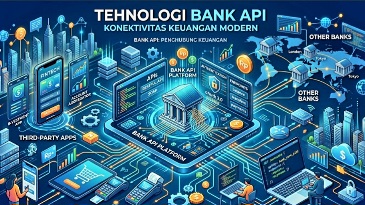
Banking APIs eliminate these challenges by allowing systems to communicate directly and automatically process transactions. For fintech companies, online marketplaces, payment gateways, and investment platforms, Banking APIs are no longer optional features.
Read Also : Is Your Money Safe with Open Banking? The Facts
They are the foundation that enables financial services to operate quickly, accurately, and efficiently while serving millions of users simultaneously.
For consumers, the benefits are immediate: faster payments, quicker balance updates, and easier transaction tracking.
How Does a Banking API Work?
Technically, a Banking API operates through three primary stages:
1. Request
An application sends a request to the bank’s system. The request may include checking an account balance, retrieving transaction history, creating a virtual account, validating a payment, or initiating a fund transfer.
2. Security Validation
The bank verifies whether the requesting application is authorized to access the service.
This process involves API keys, authentication tokens, encryption, and other security mechanisms to ensure that sensitive financial data remains protected and accessible only to authorized parties.
3. Response
If the request is successfully validated, the bank processes it and sends a response back to the application.
The response may indicate that a transaction has been successfully completed, that sufficient funds are available, or that the transaction has failed for a specific reason.
Read Also : How AI is Transforming the Banking Industry
For example, when you make a payment through an application, the app sends a request to the bank. The bank validates the payment and returns a “Payment Successful” response. The application then immediately updates the transaction status.
Although this process appears simple from the user’s perspective, it is supported by multiple layers of security. Banks do not provide unrestricted access to their systems.