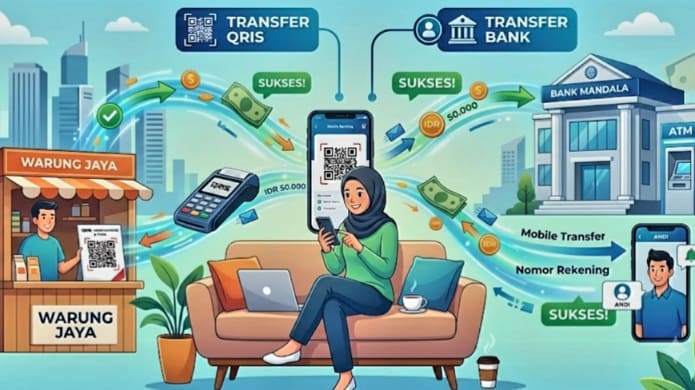
LIPOSONLINE.COM – QRIS and bank transfers are now the two most popular payment methods in Indonesia, thanks to rapid advances in digital banking.
Gone are the days when cash and queuing at a teller were the only options. Today, almost any transaction can be done from your smartphone.
Although both are digital, QRIS and bank transfers work differently and are designed for different needs.
Many people are still unsure when to use QRIS and when a bank transfer is the better choice.
In this article, LIPOSONLINE.COM breaks down everything you need to know about QRIS vs bank transfers.
Read Also :Top Neobank Features That Make Digital Banking Better
We’ll compare speed, security, fees, and the best use cases for each, with data compiled from trusted sources.
Getting to Know QRIS: Scan and Pay in Seconds
What is QRIS?
QRIS is defined as Quick Response Code Indonesian Standard. It is the national QR code standard introduced by Bank Indonesia to integrate all digital payment systems.
Before QRIS, one merchant could have separate QR codes for GoPay, OVO, DANA, etc. Now, with just one QRIS code, customers can pay using any app: mobile banking, e-wallets, fintech apps, and other digital wallets.
Read Also : How Neobanks Work: The Technology Behind Modern Banking
How QRIS Works
1. Cashier displays the QRIS code
2. Open your payment app
3. Scan the QR code and verify the payment amount.
4. Confirm the payment
5. Funds are deducted instantly and the seller receives a notification
Total time: less than 10 seconds.
2 Types of QRIS You Should Know
1. Static QRIS
The code stays the same. Commonly used by MSMEs, small shops, and street vendors. The payment amount has to be entered manually by the buyer.
2. Dynamic QRIS
A new code is generated for every transaction. Used by modern retail, restaurants, and marketplaces. The amount is filled in automatically to prevent errors.