LIPOSONLINE.COM – Amid the widespread use of electronic transfers, QRIS, and digital wallets, one traditional financial instrument continues to hold historical significance: the postal money order.
A money order is a payment instrument that enables individuals to send funds securely without physically transporting cash. Long before the advent of mobile banking and BI-FAST, money orders were the preferred method of remittance for millions of Indonesians, particularly those living in remote areas.
Although technological advancements have reduced their popularity, the fundamental purpose of money orders—providing a secure and accessible means of transferring money—remains relevant today.
The Transformation of Money Transfers: From Bills of Exchange to Postal Money Orders
According to information compiled by LIPOSONLINE.COM from various sources, the concept of transferring money without moving physical cash dates back to medieval Europe. Merchants used bills of exchange to avoid carrying large quantities of gold while conducting international trade.
During the 17th and 18th centuries, as postal systems became more organized, money orders were standardized, with post offices serving as trusted intermediaries. This system offered a far safer alternative to sending cash through the mail, which was vulnerable to theft and loss.
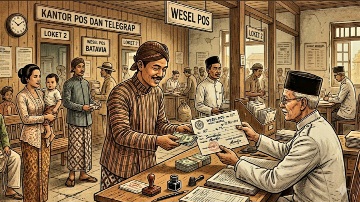
Postal money orders were introduced in Indonesia during the Dutch colonial era and have remained part of the country’s financial services ever since.
Post offices became the backbone of long-distance financial transactions, allowing families—even in the most remote villages—to send and receive money securely.
The introduction of telegraph technology in the nineteenth century gave rise to the telegraphic money order, reducing transfer times from several weeks to only a few days. This innovation laid the foundation for the fast electronic fund transfer systems available today.
The twentieth century witnessed the emergence of electronic bank transfers, followed by digital payment systems in the late 1990s. As these technologies became increasingly widespread, particularly in urban areas, the use of traditional money orders gradually declined.
However, money orders did not disappear—they evolved.
In Indonesia, PT Pos Indonesia introduced the Electronic Postal Money Order (Weselpos Elektronik), combining the country’s extensive postal network with digital transaction processing.
The company also developed Corporate Postal Money Orders (Weselpos Korporat), enabling businesses and government institutions to distribute salaries and social assistance payments electronically to multiple recipients through an integrated online system.