Secure Transactions: Funds are released only after the recipient’s identity has been verified, reducing the risk of fraud or misdelivery.
Official Proof of Transaction: Every transfer is accompanied by an official receipt that records the sender, recipient, transfer amount, and transaction date.
No Bank Account Required: Both senders and recipients can complete transactions without opening a bank account.
Suitable for Small to Medium Transfers: Postal money orders remain a practical solution for transferring moderate amounts of money, particularly to recipients who are unfamiliar with digital banking services.
Advantages of Digital Banking
Digital banking, on the other hand, offers greater speed, convenience, and cost efficiency.
BI-FAST enables near real-time fund transfers, while mobile banking services operate around the clock, allowing customers to complete transactions anytime without visiting a physical location.
How Postal Money Orders Work Today
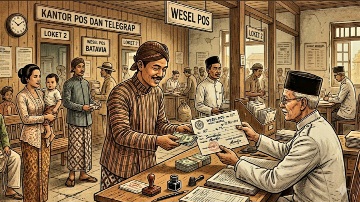
The process remains straightforward. The sender visits a post office, deposits the funds, and receives a transaction PIN. The recipient then visits any participating post office with a valid identification card and the PIN to collect the money.
A bank account is not required, and thanks to digital processing, many transactions are now completed in real time.
Challenges Compared with Modern Banking Technology
Despite continuous improvements, postal money orders face several limitations compared with digital financial services:
Transactions require customers to visit a post office in person.
Administrative fees generally apply, unlike some BI-FAST transfers or promotional digital wallet services.
Transaction limits apply to the amount of money that can be transferred.
Services are available only during post office operating hours.
They are less suitable for recurring payments, such as monthly bills or scheduled transfers.