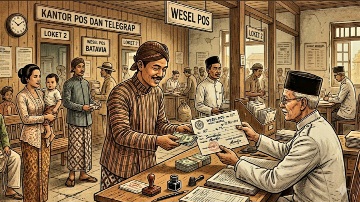
Several postal money order services continue to operate in Indonesia today:
Instant Postal Money Order (Weselpos Instan): Funds become available immediately after the sender completes the transaction. The sender receives a Personal Identification Number (PIN), which the recipient can use to collect the money at any participating post office.
Weselpos Prima: A notification-based money order service that is slower than the instant service but remains suitable for specific transaction requirements.
Corporate/Online Postal Money Order: Designed for organizations that need to distribute salaries, pensions, or government social assistance payments to large numbers of beneficiaries.
International Postal Money Order: Primarily intended for Indonesian migrant workers who need to send remittances from overseas.
In addition to postal money orders, banks also offer bank drafts, which are guaranteed by the issuing bank and commonly used for high-value transactions such as purchasing property or vehicles.
Postal Money Orders and Modern Banking Technologies
The introduction of BI-FAST, QRIS, and mobile banking has transformed the way Indonesians transfer money.
Nevertheless, digital financial services have yet to achieve universal coverage, particularly in Indonesia’s frontier, outermost, and underdeveloped (3T) regions.
Consequently, postal money orders—especially Instant Postal Money Orders—continue to play an important role in promoting financial inclusion.
Advantages of Postal Money Orders
Extensive Reach: Indonesia’s postal network extends to remote communities where bank branches, ATMs, or reliable internet connections may not be available.
Financial Inclusion: Individuals without bank accounts can still send and receive money using only a valid national identity card (KTP).