LIPOSONLINE.COM – Banking has always depended on trusted records. Every payment, transfer, loan, security, and account balance needs accurate information that different parties can rely on. Distributed Ledger Technology in Banking offers a different way to manage those records by allowing multiple authorized participants to share and update a synchronized digital ledger.
DLT is broader than blockchain, although blockchain is one of its best-known forms. In banking, the technology is being explored for payments, settlement, tokenization, identity, collateral management, and other financial processes. The Bank for International Settlements notes that DLT can potentially improve efficiency through immutable records, automation, digital identity, and faster settlement.
What Is Distributed Ledger Technology in Banking?
Distributed Ledger Technology in Banking refers to the use of shared digital ledgers to record and synchronize financial information across multiple authorized participants.
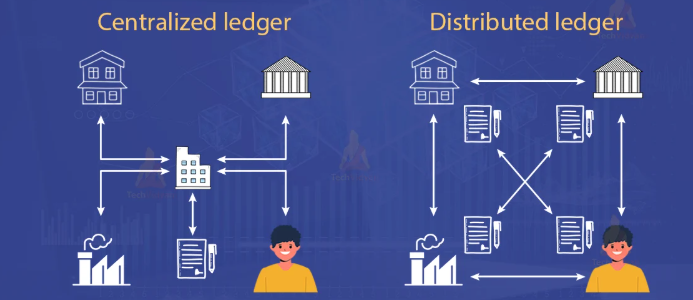
In a traditional banking environment, different institutions may maintain separate databases. When a transaction involves several parties, information may need to be exchanged and reconciled between those systems.
A distributed ledger can create a shared record that participating organizations can access according to predefined permissions.
DLT does not necessarily mean that every participant can see everything. In financial services, permissioned DLT networks are particularly relevant because access, transaction validation, and governance can be restricted to approved organizations.
The BIS distinguishes between public permissionless ledgers and private permissioned designs. Permissioned networks allow designated participants to interact and participate in validation, which can make them more suitable for regulated financial environments.
How DLT Works in Banking
The basic idea is easier to understand through a transaction.
Imagine Bank A needs to transfer an asset or payment-related claim to Bank B.
In a conventional process, multiple systems may separately record the transaction. Each organization may then reconcile its records.
With DLT, participating institutions can use a shared ledger to record the transaction according to agreed rules.
A simplified process looks like this:
- A transaction is initiated.
- The network checks whether the transaction meets predefined conditions.
- Authorized participants validate the transaction.
- The ledger is updated according to the network’s consensus mechanism.
- Participants receive the updated record.
- The transaction becomes part of the shared history.
The exact architecture varies considerably. Some networks use blockchain structures, while others use different distributed ledger designs.
Key Benefits of DLT in Banking
1. Faster Settlement
One of the most discussed benefits of DLT is faster settlement.
Traditional financial transactions can involve several intermediaries and reconciliation processes. DLT may allow multiple parties to coordinate around a shared record, potentially reducing some of those steps.
The BIS identifies atomic settlement as one potential benefit of DLT. In suitable systems, linked transaction components can be settled together rather than requiring separate reconciliation stages.
The potential improvement can be significant for markets where settlement currently takes hours or days, although actual performance depends on network design and regulation.
2. Reduced Reconciliation
Banks and financial institutions often maintain separate records of the same transaction.
This creates reconciliation work because organizations need to confirm that their records match.
A shared ledger can reduce duplication by allowing authorized participants to work from a synchronized record.
For suitable processes, this could reduce the amount of manual reconciliation substantially. However, DLT does not eliminate the need for controls, audits, or reconciliation in every banking environment.
3. Greater Transparency
DLT can provide participants with a consistent record of transactions.
In a permissioned banking network, access can be controlled so that each participant sees only the information appropriate to its role.
This can improve traceability while still supporting privacy requirements.
The value is particularly relevant for processes involving multiple institutions, where determining the current status of an asset or transaction can otherwise require information from several systems.
4. Improved Operational Efficiency
The BIS identifies lower costs and greater efficiency as potential advantages of DLT in financial services. These benefits can arise from reducing intermediaries, automating processes, improving record keeping, and aligning transaction processes.
The actual savings depend on the process.
DLT is unlikely to create meaningful benefits if it is simply added to an already efficient workflow. Its strongest business case usually appears when several organizations need to coordinate around the same information.
Major Banking Use Cases for DLT
Cross-Border Payments
Cross-border payments are one of the most frequently discussed DLT applications.
International transfers can involve correspondent banks, messaging systems, foreign exchange processes, and different settlement infrastructures.
DLT-based systems may help participating institutions coordinate payment and settlement information more directly.
A notable example is Project mBridge, which reached minimum viable product stage in 2024. The project explored a multi-central-bank digital currency platform built using DLT for instant cross-border payments and settlement.
This demonstrates that DLT research is not limited to private-sector experiments; central banks and financial institutions are also examining how the technology could support future payment infrastructure.
Securities Settlement
DLT can also be used to represent and settle financial assets digitally.
Instead of maintaining separate records across trading, clearing, custody, and settlement systems, a DLT-based platform could potentially connect some of these activities.
This is one reason tokenization has become closely associated with DLT.
The BIS describes tokenization as a way of representing assets or money in digital form and highlights its potential role in improving financial market infrastructure.
Tokenized Deposits and Assets
Tokenization involves representing an asset or financial claim digitally.
For banks, potential applications include:
- Tokenized deposits
- Tokenized securities
- Digital bonds
- Tokenized collateral
- Digital representations of other financial assets
The BIS’s 2024 survey found that 26% of responding jurisdictions reported that commercial banks had engaged in work related to tokenized deposits. Among those jurisdictions, 71% reported research activity, 50% reported proof-of-concept work, 26% reported pilots, and 16% reported that tokenized deposits had been issued live.
These figures show that the technology remains at different stages of development rather than representing a universal banking standard.
Collateral Management
Financial institutions constantly manage collateral for lending, derivatives, and other transactions.
DLT could provide a shared view of collateral ownership, status, and movement.
Automation through smart contracts may also allow certain actions to occur automatically when predefined conditions are satisfied.
This could reduce delays and improve coordination between counterparties.
DLT vs Traditional Banking Databases
DLT is not automatically better than a conventional database.
A traditional database can be highly efficient when one organization controls the system and there is no need for multiple independent parties to maintain a shared record.
DLT becomes more interesting when several organizations need to coordinate without relying entirely on one institution’s database.
Traditional Database
- Usually controlled by one organization
- Centralized governance
- Efficient for internal processes
- Established operational models
- Easier to modify centrally
Distributed Ledger
- Shared across multiple participants
- Requires agreed governance
- Can provide synchronized records
- Useful for multi-party processes
- Can support programmable transactions
The appropriate technology depends on the specific banking problem rather than the popularity of the technology itself.
Challenges of Distributed Ledger Technology in Banking
Scalability
Financial systems can process extremely high transaction volumes.
A DLT network must therefore meet demanding requirements for throughput, reliability, and availability.
Public and permissioned networks can have very different performance characteristics, so banks need to evaluate technology based on actual business requirements.
Privacy
Financial information is highly sensitive.
A ledger design must ensure that transaction information is visible only to authorized parties.
The BIS notes that public permissionless networks can create privacy challenges because transactions may be publicly visible.
Regulatory Compliance
Banks operate under strict regulatory frameworks.
DLT implementations must address requirements related to:
- Data protection
- Financial reporting
- Anti-money laundering controls
- Operational resilience
- Auditability
- Customer protection
Technology cannot replace regulatory governance.
Integration With Existing Systems
Most banks cannot simply abandon their existing infrastructure.