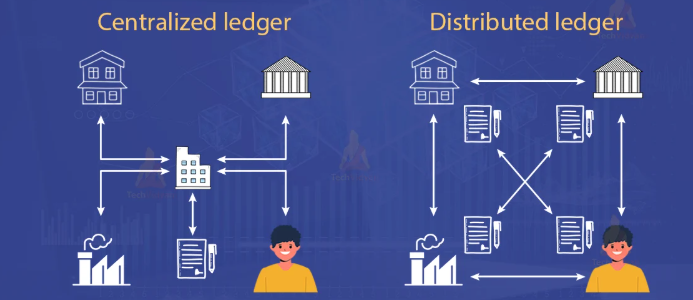
DLT platforms need to interact with core banking systems, payment networks, identity platforms, risk systems, and other financial infrastructure.
Integration can therefore become one of the largest practical challenges.
How Much Are Banks Actually Adopting DLT?
DLT adoption should be viewed realistically.
The technology has attracted significant interest, but it has not replaced conventional banking infrastructure.
A BIS review of financial digitalization cited an ECB 2023 survey in which DLT had the lowest adoption rate among the surveyed banking technologies, with fewer than 20% of respondents using it.
At the same time, experimentation continues. PwC reported in 2024 that blockchain-based solutions were being developed by leading financial institutions for areas including cross-border payments, liquidity management, and trade solutions.
This suggests a more balanced picture: DLT is an emerging technology with meaningful financial use cases, but adoption remains selective.
The Future of DLT in Banking
The future of Distributed Ledger Technology in Banking is likely to focus less on replacing every existing banking database and more on improving specific multi-party processes.
Tokenization, cross-border settlement, digital assets, and programmable financial infrastructure are among the areas receiving continued attention.
The BIS’s recent work also emphasizes that DLT can support new forms of money, tokenized assets and deposits, and improvements to existing banking activities such as collateral management.
The most successful implementations will likely be those with a clear business purpose, strong governance, reliable interoperability, and measurable operational benefits.
Conclusion
Distributed Ledger Technology in Banking provides a new approach to recording and coordinating financial information across multiple participants. Its potential benefits include faster settlement, reduced reconciliation, improved traceability, automation, and more efficient financial infrastructure.
However, DLT is not a universal replacement for conventional databases. Adoption remains selective, with banks and regulators still evaluating where the technology creates genuine value.