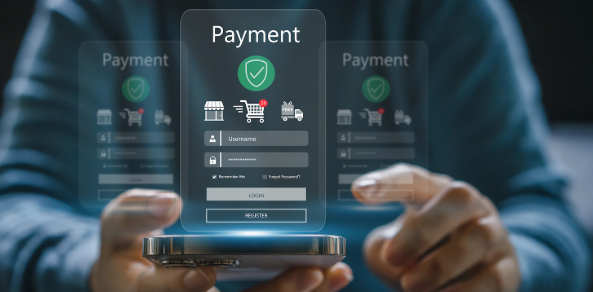
The World Bank found that although mobile ownership is widespread, security practices remain uneven. Among approximately 4 billion adults in low- and middle-income economies who own a mobile phone, only around half use a password to protect their phone.
Digital Payment Systems and Businesses
For businesses, digital payment systems are becoming more than a checkout tool.
Payment data can help companies understand purchasing patterns, manage cash flow, automate reconciliation, and improve customer experiences.
Small businesses can also benefit from digital transaction records. The World Bank notes that digital merchant payments can create useful records of cash flows that may help small businesses access credit.
For larger companies, integration between payment systems and enterprise software can reduce manual work. Payments can connect with accounting, inventory management, customer relationship management, and financial reporting systems.
The Role of Banks and Fintech Companies
Traditional banks are no longer the only major players in digital payments. Fintech companies and technology platforms have introduced new payment experiences, while banks continue to operate critical financial infrastructure.
BIS research published in July 2026 notes that retail payments have digitalized rapidly across both advanced and emerging economies. The shift has introduced new competitors, including fintech and big-tech firms, while established banks and card networks continue to hold important positions in many markets.
This competition can encourage providers to improve speed, usability, security, and pricing.
The Future of Digital Payment Systems
The next stage of digital payments is likely to focus on interoperability, instant settlement, automation, and cross-border connectivity.
Faster Cross-Border Payments
International payments have traditionally been more complicated than domestic transactions because multiple financial institutions, currencies, regulations, and payment infrastructures can be involved.
Projects such as BIS Project Nexus are exploring ways to connect domestic instant payment systems. BIS says standardized connections could enable cross-border payments to reach recipients within 60 seconds in most cases.
More Intelligent Fraud Detection
Artificial intelligence and machine learning can analyze transaction patterns and identify unusual behavior. Instead of relying only on fixed rules, modern systems can assess multiple signals and adapt to changing patterns.
The goal is to detect suspicious activity while minimizing false declines that inconvenience legitimate customers.
Greater Interoperability
The future of digital payments will depend heavily on systems being able to communicate with one another.
When payment networks, banks, wallets, and national infrastructures become more interoperable, users can potentially transfer money across different platforms with fewer barriers.
Conclusion
Digital payment systems are reshaping the way money moves through the global economy. Mobile payments, digital wallets, cards, QR codes, electronic transfers, and instant payment networks are making transactions faster and more convenient while creating new opportunities for businesses and financial institutions.
The data show that this transformation is already well underway. Digital merchant payments reached 42% of adults in low- and middle-income economies in 2024, up from 35% in 2021. At the same time, cash remains relevant, meaning the future is unlikely to be completely cashless in every market.
The strongest digital payment systems will therefore be those that balance speed, convenience, security, affordability, privacy, and accessibility. As financial technology continues to evolve, digital payments will remain one of the most important foundations of modern banking and commerce.