A real migration can take considerably longer when the institution has multiple products, complicated integrations, large historical datasets, or strict regulatory requirements.
Measuring Core Banking Migration Success
The project should be measured using clear performance indicators.
Read Also : Core Banking Solutions
Important KPIs include:
- Data reconciliation accuracy
- Transaction success rate
- System availability
- API response time
- Number of migration defects
- Customer-impact incidents
- Recovery time
- Post-migration transaction volume
- Support-ticket volume
For example, a bank could establish a target of 99.99% transaction processing accuracy for critical migration validation, while setting separate targets for availability, latency, and reconciliation. Actual thresholds should be determined according to the institution’s risk framework and regulatory obligations.
The Future of Core Banking Migration
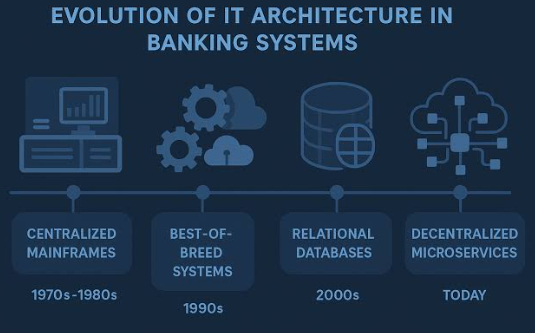
Core banking migration is becoming less about replacing one application with another and more about creating an adaptable financial technology ecosystem.
Modern migration programs increasingly combine:
- Cloud-native infrastructure
- API-driven integration
- Event-driven processing
- Modular banking services
- Automated testing
- Advanced data validation
- Artificial intelligence-assisted analysis
- Continuous monitoring
Recent industry discussions also emphasize phased migration, parallel operations, and careful data reconciliation as ways to reduce disruption during modernization.
The direction is clear: banks need platforms that can evolve without requiring a complete rebuild every time customer expectations change.
Conclusion
Core Banking Migration is a major transformation that touches almost every part of a financial institution. From customer accounts and transaction histories to payment integrations and regulatory reporting, the migration must protect financial accuracy while creating a stronger foundation for future services.
The safest strategy is rarely about moving as quickly as possible. It is about understanding dependencies, preparing data, testing relentlessly, migrating in manageable stages when appropriate, and maintaining strong operational controls.
A modern core can give banks greater flexibility, better integration capabilities, and stronger support for digital products. But the technology itself is only one part of the equation. Successful Core Banking Migration depends on combining architecture, data quality, people, governance, security, and disciplined execution into one coherent transformation program.