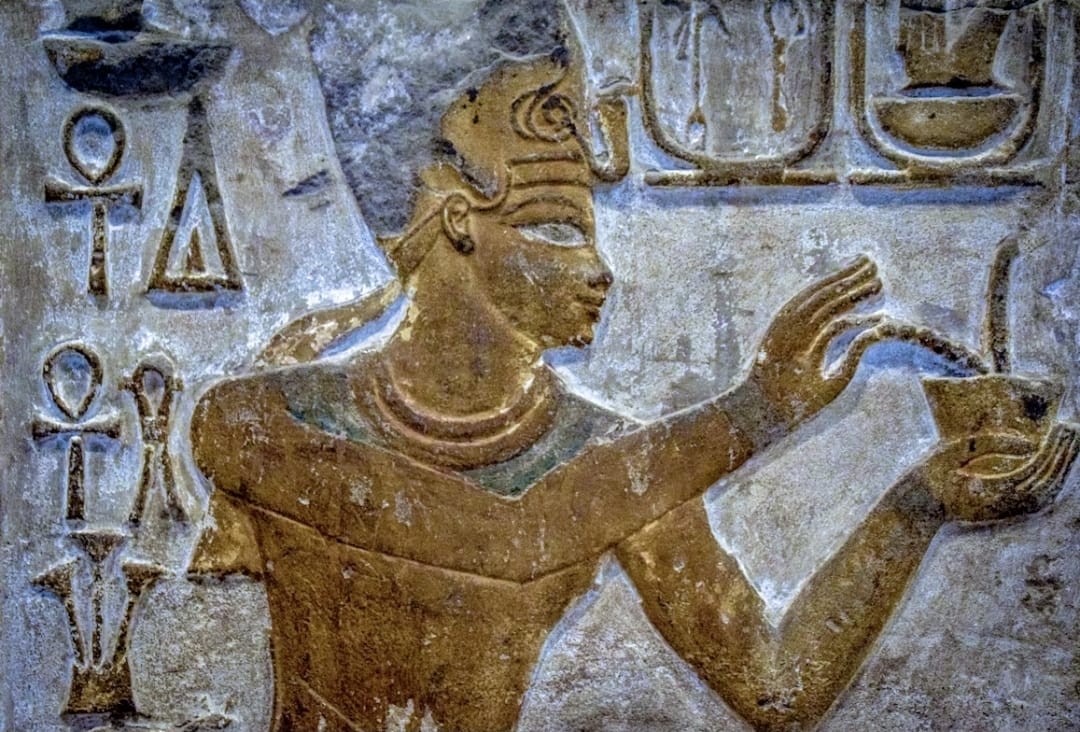
LIPOSONLINE.COM- Long before the invention of credit cards or central banking, the Nile Valley was already pulsing with one of the most sophisticated economic systems in the ancient world. It wasn’t built on gold coins or digital ledgers, but on the rhythms of the river and a bureaucratic machine that would make modern governments blush. If you think the modern economy is complex, wait until you peel back the layers of Ancient Egyptian history—a world where grain was the currency, scribes were the masters of finance, and the state was the ultimate CEO.
The Foundation: Why Grain Was Gold
In the early periods of Egyptian history, money as we know it didn’t exist. There were no minted coins. Instead, the economy functioned on a sophisticated barter system underpinned by a “commodity currency.” The primary unit of value was grain—specifically, emmer wheat and barley.
The Math of the Nile
Grain was the perfect currency for a state like Egypt. It was durable, divisible, and universally needed. Recent archaeological estimations suggest that the average Egyptian worker’s daily wage was roughly 10 loaves of bread and two jugs of beer, valued in grain equivalents.
-
Standardization: By 2000 BCE, the Egyptian state had standardized a unit of measurement called the deben.
-
Storage and Inflation: Because grain is perishable, the state built massive granaries.
The Rise of the Scribe: Managing the Bureaucracy
If grain was the fuel, the scribe was the engine of the Egyptian economy. The Egyptian government was essentially a massive accounting firm. Without the ability to track every bushel of wheat entering a granary or every head of cattle taxed by the local governor (nomarch), the Pharaoh’s power would have crumbled.