LIPOSONLINE.COM – Even as fintech and digital payment platforms expand, money orders services still hold a significant role in Indonesia’s financial ecosystem.
The widespread adoption of mobile banking, digital wallets, and QRIS has undoubtedly transformed the way people conduct financial transactions. However, not everyone has equal access to these financial services.
For many Indonesians, particularly those living in rural and remote areas or those without bank accounts, money orders remain a practical, secure, and reliable way to send and receive funds. This is why services such as Weselpos Instan continue to be relevant in today’s increasingly digital economy.
As reported by LIPOSONLINE.COM based on information compiled from various sources, money orders are more than just a conventional money transfer service. They also serve as an important instrument in promoting financial inclusion by ensuring that all segments of society have access to affordable, secure, and accessible financial services.
Reaching the Unbanked Population
One of the greatest strengths of money orders is their ability to serve people who do not have bank accounts, commonly referred to as the unbanked.
Although the number of Indonesians using banking services continues to increase, millions of people still remain outside the formal financial system.
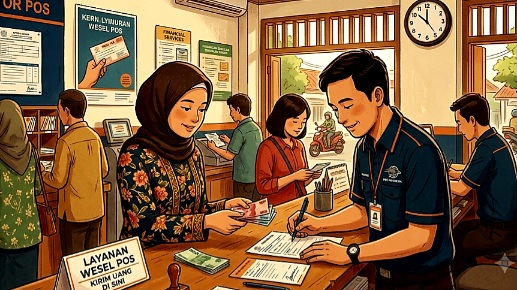
Through a money order service, customers simply visit a post office with valid identification and the amount of money they wish to send. Recipients are not required to have a bank account, as they can collect the funds in cash at the designated post office.
This accessibility makes money orders an effective financial solution, especially in regions where banking infrastructure remains limited.
Supporting Domestic and International Remittances
Money orders also play a significant role in facilitating remittances, both from overseas and between regions within Indonesia.
Many Indonesian migrant workers rely on international postal money order services to send their earnings home to their families. These funds are commonly used to cover daily living expenses, children’s education, healthcare costs, and even small business investments.
Domestically, workers who migrate to major cities for employment also continue to use money orders to send financial support to their parents and relatives in rural areas.