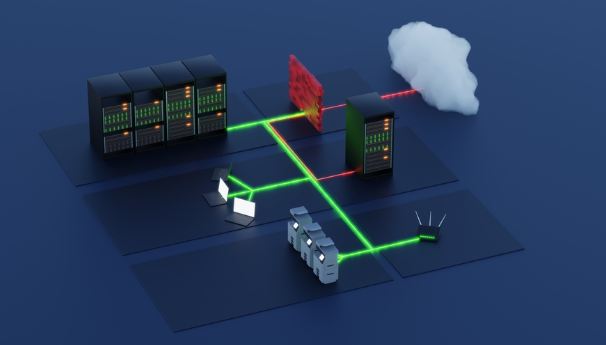
LIPOSONLINE.COM – Banks no longer operate from a single digital environment. Online banking apps, payment platforms, ATMs, employee devices, databases, cloud services, and core banking systems all need to communicate while remaining protected from unauthorized access.
That is where Network Segmentation Technology in Banking becomes useful. Instead of treating the entire network as one large environment, segmentation divides it into separate zones with controlled communication between them.
The idea is straightforward: if one part of a banking network is compromised, the attacker should not automatically gain access to everything else.
What Is Network Segmentation in Banking?
Network segmentation is a security approach that divides a computer network into smaller sections and applies different access rules to each section.
In a banking environment, these sections might include:
- Core banking systems
- ATM networks
- Payment processing systems
- Employee devices
- Customer-facing applications
- Database servers
- Security and monitoring systems
- Cloud workloads
Each segment can have its own security policies. Communication between segments is permitted only when it is required and authorized.
For example, an employee workstation may need to access an internal business application, but it should not automatically have direct access to a database containing sensitive customer records.
This separation reduces the number of possible pathways through which an attacker can move across an environment.
How Network Segmentation Technology Works in Banking
Network segmentation can be implemented through several technologies and architectural approaches.
VLAN Segmentation
Virtual Local Area Networks, or VLANs, can separate devices logically even when they use the same physical network infrastructure.
A bank could place employee computers, servers, and other systems into separate VLANs.
Traffic between them can then be controlled using firewalls or Layer 3 network policies.
VLANs are useful for basic separation, although they are only one part of a broader security architecture.
Firewall-Based Segmentation
Firewalls can control traffic moving between different network zones.
Instead of allowing unrestricted communication, security teams can create rules specifying:
- Which systems can communicate
- Which ports can be used
- Which protocols are permitted
- Which sources can initiate connections
- Which traffic should be blocked or inspected
This creates a security checkpoint between network segments.
Microsegmentation
Microsegmentation takes the concept further by creating much smaller security boundaries, sometimes around individual workloads, applications, or devices.
This approach can be particularly useful in modern banking environments where applications may run across data centers, private clouds, and public cloud infrastructure.
Rather than simply saying, “this server belongs to the trusted network,” security policies can define exactly which application is allowed to communicate with it.
Network Segmentation Technology in Banking and Zero Trust
Network segmentation is closely related to the Zero Trust security model.
Zero Trust does not assume that a user, device, or application should automatically be trusted simply because it is inside a corporate network.
Instead, access is evaluated based on factors such as:
- User identity
- Device condition
- Application
- Location
- Requested resource
- Security policy
The National Institute of Standards and Technology (NIST) describes Zero Trust as an approach that moves security away from static network perimeters and toward protecting individual resources.
For banks, this is particularly relevant because modern financial infrastructure extends beyond traditional branch and data-center networks.
Why Banks Need Network Segmentation
Limiting Lateral Movement
One of the biggest security benefits of segmentation is limiting lateral movement.
Imagine an attacker compromises an employee laptop through phishing. Without adequate separation, that device could potentially provide a pathway toward other internal systems.
With segmentation, access can be restricted so the compromised device cannot freely communicate with critical banking infrastructure.
The attacker may still compromise one endpoint, but the number of systems reachable from that endpoint can be reduced.
Protecting Critical Banking Systems
Not every system has the same level of importance.
A public-facing website and a core banking database should not necessarily have identical network access.
Banks can place critical systems into highly restricted segments and allow only specific applications or services to communicate with them.
This creates additional protection around high-value assets.
Supporting Compliance
Financial institutions operate under extensive regulatory and security requirements.
Segmentation can help organizations demonstrate that sensitive systems are subject to stronger controls.
It can also make security monitoring easier because traffic between important systems can be more clearly defined and logged.
Network Segmentation by Banking Environment
Different banking environments require different segmentation strategies.
1. Core Banking Systems
Core banking platforms process important information related to accounts, balances, transactions, and other financial operations.
Because these systems are highly sensitive, access should generally be tightly controlled.
A segmented architecture can limit communication to approved applications and administrative services.
2. ATM Networks
ATMs represent another important security zone.
ATM systems communicate with banking infrastructure to process withdrawals, deposits, balance inquiries, and other transactions.
Separating ATM infrastructure from ordinary employee networks can reduce unnecessary exposure.
3. Payment Systems
Payment processing environments often require strict security controls because they handle transaction information.
Segmentation can separate payment infrastructure from unrelated corporate systems.
For example, payment servers may be allowed to communicate only with designated databases, authentication systems, and external payment gateways.
4. Employee Devices
Employee laptops and desktops are common targets for phishing, malware, and credential theft.
Putting employee devices in a separate network segment can help prevent a compromised workstation from directly reaching critical infrastructure.
Security Benefits and Practical Impact
The value of segmentation can be considered across several areas rather than through one universal percentage.
A practical banking security program might prioritize segmentation approximately as follows:
- 40%: protecting critical systems and sensitive data
- 25%: limiting lateral movement
- 20%: controlling application-to-application communication
- 15%: improving monitoring and incident response
These percentages are an illustrative allocation model, not an industry-wide benchmark. Banks should determine priorities based on their own infrastructure, threat model, regulatory requirements, and risk assessment.