The broader cybersecurity need is clear. IBM’s Cost of a Data Breach Report 2025 reported that the global average cost of a data breach reached $4.44 million, demonstrating why organizations continue investing in layered security controls.
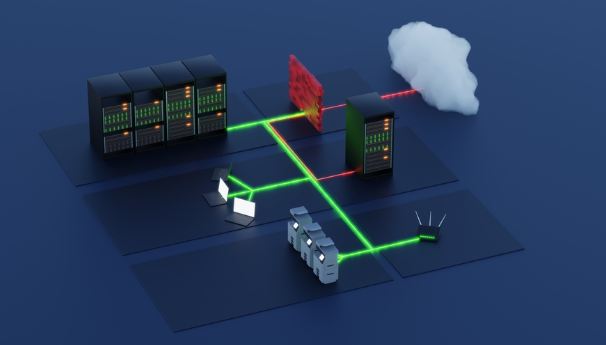
Segmentation cannot prevent every breach, but it can be used as one layer for limiting the potential scope of an incident.
Network Segmentation and Incident Response
Segmentation can also make incident response more manageable.
When security teams detect suspicious activity, they may be able to isolate a particular segment without shutting down an entire banking environment.
For example, if malware is detected on a group of employee devices, security teams can restrict their network access while critical banking services continue operating.
This can support three important incident-response activities:
- Containment — limiting the affected area.
- Investigation — analyzing traffic within and between segments.
- Recovery — restoring affected systems while maintaining separation.
The exact response depends on the architecture and the nature of the incident.
Challenges of Banking Network Segmentation
Segmentation provides useful security controls, but implementation can be complicated.
Legacy Infrastructure
Banks often operate systems that were developed years or even decades apart.
Some legacy applications may depend on network connections that are poorly documented. Creating new restrictions without understanding those dependencies can disrupt operations.
Complex Rules
Too many firewall and segmentation rules can become difficult to manage.
Security teams need clear documentation and regular reviews to prevent outdated rules from creating unnecessary access.
Cloud Environments
Modern banks increasingly use cloud infrastructure.
A segmentation strategy therefore needs to cover more than physical data centers. Security policies may need to follow workloads across different environments.
Operational Disruption
Poorly planned segmentation can accidentally block legitimate traffic.
Banks need testing, monitoring, change management, and rollback procedures before applying major network restrictions.
The Role of Automation and AI
Automation can make network segmentation easier to manage.
Security platforms can analyze network traffic and identify communication patterns between applications.
AI and machine learning can also help security teams detect unusual behavior that may indicate compromised accounts or systems.
For example, if an application suddenly begins communicating with a server it has never contacted before, an automated security platform could flag the connection for investigation.
However, automated decisions still need appropriate controls. Incorrect classifications can block legitimate banking operations or create security gaps.
Future of Network Segmentation in Banking
The future of Network Segmentation Technology in Banking is likely to move toward dynamic and identity-based security.
Instead of relying entirely on fixed network zones, organizations can increasingly combine segmentation with:
- Zero Trust architecture
- Software-defined networking
- Cloud security
- Identity and access management
- Microsegmentation
- AI-based monitoring
- Automated policy enforcement
This approach allows security controls to adapt as applications, users, and workloads change.
The result is a banking environment where access is based less on physical network location and more on identity, application requirements, and security context.
Conclusion
Network Segmentation Technology in Banking provides a structured way to separate critical systems, control communication, and limit the potential spread of cyberattacks.
Its importance becomes clearer as banking infrastructure becomes more connected. A bank may operate mobile applications, ATMs, payment systems, cloud workloads, employee devices, and core banking platforms at the same time. Treating all of these environments as one trusted network creates unnecessary risk.
Segmentation does not replace encryption, authentication, endpoint protection, monitoring, or other cybersecurity controls. Instead, it works as one layer within a broader defense strategy.