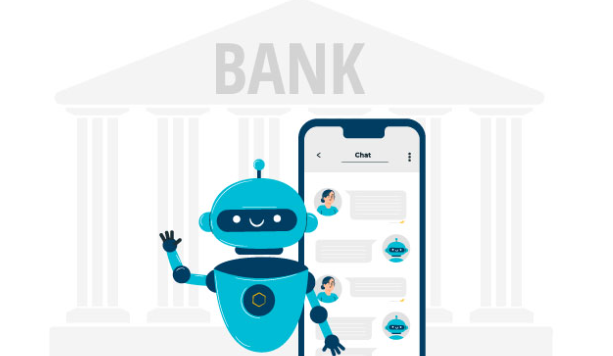
LIPOSONLINE.COM- AI chatbots in banking are software systems that use artificial intelligence and natural language technologies to communicate with customers through text or voice. Unlike traditional automated systems that depend heavily on predefined commands, modern conversational AI can understand the intent behind a customer’s question and provide a more context-aware response.
These systems can be integrated into mobile banking applications, websites, messaging platforms, and other digital channels. Depending on their design and security permissions, they may answer frequently asked questions, explain banking products, guide customers through processes, or connect users with human representatives when an issue becomes too complicated.
Modern conversational AI typically combines natural language processing, machine learning, and increasingly generative AI to understand requests and create more flexible responses.
Why AI Chatbots in Banking Are Growing
Banking customers increasingly expect digital services to be fast, convenient, and available around the clock. Traditional customer service models can struggle to meet those expectations when large numbers of customers contact support at the same time.
Read Also : Will AI Replace Traditional Banking Jobs? The Real Truth
AI chatbots offer banks a way to handle routine conversations automatically while allowing human employees to concentrate on cases that require judgment or personal assistance.
The wider adoption of generative AI is also accelerating this trend. IBM reported that in 2024, 51% of banks had a tactical approach to generative AI, while 8% were developing it systematically.
This shows an industry moving from experimentation toward more structured AI implementation.
Customer Expectations Are Changing
Consumers are not only becoming familiar with AI; they are also starting to expect financial institutions to provide AI-powered experiences.
McKinsey’s 2025 banking research found that 62% of generative AI users wanted their primary bank to offer generative AI solutions. When the waiting time for a human representative reached 10 minutes, 70% of generative AI users said they would rather interact with an AI voice agent immediately.
These numbers highlight an important point: convenience can strongly influence how customers perceive digital banking services.
Key Uses of AI Chatbots in Banking
AI chatbots can support a wide range of banking activities. The most effective applications are usually those where customers need quick information or assistance with repetitive processes.
1. Answering Customer Questions
One of the simplest applications is automated customer support.
Customers can ask questions about:
- Account features
- Bank fees
- Card services
- Transaction procedures
- Branch information
- Digital banking features
- Loan or savings products
- General banking policies
Instead of requiring an employee to answer every basic question, the chatbot can provide an immediate response.
This can reduce pressure on customer service teams, particularly during periods of high demand.
2. Helping With Routine Banking Tasks
Depending on the bank’s infrastructure and security controls, conversational AI can also guide customers through routine tasks.
For example, a chatbot may explain how to:
- Update certain account information
- Report a card problem
- Find a transaction
- Navigate a mobile banking feature
- Understand a payment status
- Start an application process
The chatbot does not necessarily need to complete every task itself. Even guiding the customer to the correct feature can make digital banking easier.
3. Product Discovery and Financial Information
AI chatbots can also help customers understand banking products.
A customer might ask about the difference between a savings account and another deposit product, for example. Instead of searching through multiple pages, the customer can ask the question conversationally.
This use case is becoming more significant as consumers increasingly use AI to research financial products. McKinsey found that among consumers using generative AI for financial tasks, 38% used it to understand financial products, while 33% used it for comparisons.
Banks therefore have an opportunity to make their own digital channels more useful when customers are making financial decisions.
Benefits of AI Chatbots in Banking
The value of banking chatbots goes beyond simply answering questions.
24/7 Customer Support
One of the biggest advantages is availability.
A chatbot does not need to operate according to traditional branch hours. Customers can interact with an automated assistant at night, during weekends, or during holidays.
This can be especially useful for customers who need basic information outside normal operating hours.
Faster Response Times
Speed is another major advantage.
Instead of waiting for an available representative, customers can receive an automated response almost immediately. For straightforward questions, this can significantly reduce friction.
McKinsey reported that a European subsidiary of a global bank replaced a traditional rules-based chatbot with a generative AI system. Seven weeks after launch, the new chatbot was 20% more effective at successfully answering customer queries than the previous tool.
Reduced Pressure on Human Agents
Chatbots can handle repetitive questions before they reach human representatives.
This allows employees to spend more time on complex situations that require empathy, judgment, investigation, or detailed financial support.
The result can be a hybrid service model in which AI handles routine interactions while humans remain responsible for higher-value conversations.
More Personalized Interactions
Modern AI can use conversation context to make responses more relevant.
Rather than forcing customers to repeatedly select options from a menu, conversational systems can interpret natural-language questions and respond according to the customer’s stated intent.
However, personalization in banking must always operate within strict privacy, security, and regulatory boundaries.
AI Chatbots and Banking Customer Experience
Customer experience is becoming an important competitive factor in digital banking.
A chatbot that gives vague answers or repeatedly misunderstands customers can create frustration. On the other hand, an assistant that quickly understands the question and provides useful guidance can make digital banking feel much simpler.